

Having drinks at a hotel rooftop bar was about the most uncharacteristic activity I did all weekend. It was equally the least legitimate El Paso experience I conjured. Yet I did it twice – at two distinguished downtown hotels – La Perla at the Plaza Hotel and El Mirador at Hotel Paso Del Norte. Funny enough, these atypical visits helped cement my understanding of the Sun City.
From up top, beer in hand, I could get some bearings on El Paso. I was able to look south, beyond the endless chain-linked fence complete with its barbed-wire crown, which, with the help of the barely flowing Rio Grande River, separates us from Mexico. I scanned endless miles of the Mexican horizon. To the east I could see El Paso sprawl like any good Texas metropolis, strip mall upon strip mall, eating up endless desert landscape, because it’s there for the taking, and we have cars. Why walk when you could be in your car alone? I felt the arid Southwest air cut through the high desert mountains. And the city’s famous sunsets did their work, clouds that masquerade as brushstrokes of effortless genius, glowing a better shade of orange minute after minute.
But, it was perfectly El Paso in that neither fell into the trappings of a prototypical rooftop bar. Each was low-key and welcoming, not exclusive or feigning importance. Drinks were pricey at La Perla, but at El Mirador I could rock a local IPA pint for $8 or a Miller Lite for $6. That’s insanely affordable for the average rooftop bar. Most people were dressed down and there for the view, nothing more. At El Mirador, Southwest flight attendants sat next to me at the bar, not jetsetters passing through en route to their final destination. Just two women off the clock, enjoying 18 hours of downtime before the next succession of flights. It was all the perks of a rooftop bar – views, breezes, and a buzz – without the obnoxious prices or insufferable, faux-elite crowds.
Though they had more affectation than anywhere else I went in the city, these bars so completely lacked the arrogance of a destination rooftop that they solidified exactly what El Paso is: a friendly and welcoming place, free of pretense. Come as you are is the understated vibe of the city.


En route to Friday’s lunch, my octogenarian driver named Juan drove painfully slow. At first it made me want to scream. But then we started chatting. Despite his slow English, and my shit Spanish, we conversed easily as Juan worked his way towards a little Spanish lesson at each stop light.
“Arizona Street.” Pointing to the street sign… “Ari. Zona. Ari means dry. Zona means Zone.”
“Ahh yeah, like arid.”
“Si, si.”
… Two streets later, “Montana Street. Montaña.” he made a little hand gesture to signify, DUH… “Mountain.”
Juan was sharing a little Spanish, but without realizing it, Juan was showing me how much Mexican culture has influenced every corner of the US. The influence in El Paso? Obvious. Instead he captured how fundamentally enmeshed our two countries are regardless of border proximity. A state over 1,000 miles away, neighboring Canada, is just the English bastardization of montaña. Not a thing I’d thought about before but it makes sense that a native Spanish speaker working at the US/Mexico border would.
I arrived downtown at the Tap Bar & Restaurant to meet up with Jim Ward (of At The Drive-In, Sparta, Sleepercar) to get a lifer’s perspective on the city. The Tap is considered a quintessential dive bar in El Paso, and that it is. The always wonderful Texas Dives said, “If you wanna meet your next lawyer, or pay off a local politician, this is the place to go.” That feels accurate. But it also encapsulates the “everyone’s welcome” vibe that was burrowing into my consciousness. It was 12:30 p.m. on a Friday, the streets downtown were deserted and eerily quiet. Inside, the place was slammed.
Blue collar workers were throwin’ back beers after their shift (or maybe on lunch), a couple was getting handsy, three generations of a family sat at a single table laughing, and a group of middle aged women put dollars in the jukebox… a variety of lives interspersed with mine. From our table in the narrow bar, I sat with Jim and his wife Kristine as we ordered our nachos along with chili rellenos burritos. The Tap is known for their nachos – they make sure each chip has equal toppings, a thoughtful endeavor for a dive bar, and it pays dividends. No impenetrable pile of molten cheese or sad and naked tortilla chips here, just perfect bites each time.


El Paso is so many things at once, so I had to ask, what is it exactly? Is it the United States or Mexico? A military or border town? A Texas or Southwest city? A desert or mountain landscape? For these two, both born and raised here, it is many of those, but at its core it’s an isolated port city. El Paso is still on the edge, at the frontier, where unknown and unsettled is what you find in every direction. And it shapes this place in both obvious and nuanced ways.
As a port city, it’s a natural gateway for immigration, which is obvious from the city’s name and its 80% Hispanic makeup, while the isolation creates a lack of outside influence that you can feel. It prevents constant comparison, and leads to a real authenticity. El Paso is just so genuine, I’m not sure it would even know how to be boastful or arrogant. This was immediately noticeable and that feeling only grew. Ward framed it well through the lens of politics, “This place is progressive not because it’s trying to be or wants to be, but because it has to be. Look around.” El Paso’s daily life is so closely intertwined with Mexico – it has a huge immigrant population plus tens of thousands of daily cross-border commuters. It’s working class and relatively poor. Progressive thinking is born out of that make up, but rather than performative, it feels strictly practical as a way to make the city viable for its population. Whatever virtue signaling or political gesturing you might find in other cities, it appeared entirely absent from El Paso.
Ward recalled a show in the early days of At The Drive-In, playing in Appleton, Wisconsin. It was in the middle of an open field, to a crowd of all white people. Despite being the one caucasian in the band, Ward felt immediately out of place asking, “Is this weird to anyone else?” The rest of the band responded with a unanimous, “yeah it’s fucking weird, but why are you uncomfortable?” The reality is, if you’ve grown up in El Paso, you’re embedded in a multi-cultural experience. And if you’re white, you’re used to being the minority. When the vacuum of West Texas’s only metropolis is all you know, landing in a homogeneous pot of its own isolation is understandably unnerving.
If authenticity is one side of the isolation coin, under-exposure might be the other. Come to El Paso for the El Paso culture. And lap it up because you’ll be hard-pressed to find a more unique city in the US (I’ve long considered New Orleans tops, I’d argue El Paso rivals it). But for the more cookie cutter experiences that feel ubiquitous elsewhere, you might feel like you’re in an alternate universe.
Take Deadbeach Brewery, for example. It’s what I imagine Mark Zuckerberg, a man who has never enjoyed a beer but wants to cosplay as a “cool” guy, might think a brewery should be. An absolutely sprawling space, taking up a quarter of a city block, yet seemingly built with no outdoor space. It’s a brewery in a city known for its sunshine for Christ’s sake, give me a patio (fwiw, many of the pictures online are of the OLD location that did have one).
Then, upon entering the behemoth, instead of having an open and welcoming bar, they bottlenecked the entire experience by lining patrons in a narrow hallway at a hostess stand. You wait to be seated in one of three uniquely separated rooms, because instead of making 10,000 square feet inviting and open, they went for claustrophobic and disjointed.
First, the aquarium boardroom. The floor to ceiling windows look out to the hall of waiting customers but it has no windows to the outside world. You stare at the waiting diners, they stare back. Next, the small bar where I never saw a bartender or patrons. It seemed to be used only as a giant food running station. And finally, the Frankenstein sports bar & dance club. This room was also a glass case within the building, looking out to what felt like a staged brewing operation. There was a bizarre grid of TVs no one was watching while excessive stage lighting hung from the ceilings like it was primed for dance rehearsals. But below were no dancers, just tables with sad customers. While there was a bar mere feet from our hightop, we had to wait for table service rather than order from a bartender. Lest I forget, the beers were a disappointment.


Was the owner creating an experience they never had? I don’t drink beer and I don’t hang out at breweries, but it seems like a great investment opportunity! I think at least part of that comes from brain drain – a mass exodus where high school and college kids graduate and leave for new experiences and opportunities, creating a deficit of fresh minds to create and embrace these destinations. Without a young audience to frequent and shape them, these places exist as some sort of purgatory for those who do pass through. It should be noted I did have a few good beers from Aurellia’s Brewhouse, so I know you can get a good local pint in El Paso.
Ward and several other people noted brain drain throughout the visit, it’s a problem the city is acutely aware of. A question that remains unanswered for me is how El Paso has grown in population over the last 80 years, with a spike of over 115,000 residents in the last 25 years, yet continues to suffer from this? How can that growth come with so few young people? I feel like it must be tied to the military but I can’t understand it.
As a visitor though, it was easy to look past a miss like this. As I learned early on, El Paso does its own thing really well. When in its comfort zone, it’s hard to beat.
After two nights solo, I met my friend Alex (fellow Substack writer and bar lover) who flew in for his own West Texas adventure. As an Englishman journeying to this far flung corner of the US, his intro to El Paso had to be Rosa’s Cantina (yes, that Rosa’s Cantina, from the famed Marty Robbins song). Located on the northwest edge of town, it’s on the side of a dusty 4-lane road with Harley’s parked out front. Besides the train yard and handful of warehouses nearby, it may as well be in the middle of nowhere. A perfect spot for two gingers to hide from the blasting afternoon sun.
Damn, the vibes are good here. It’s one part cantina, one part roadhouse, one part honky-tonk, all things greatness. Every table in the place was full at the off hour of 3:30 p.m. so we grabbed seats at the bar. It was full of multi-generational families, bikers, city people getting their relief from the hustle and bustle, and country folks getting their taste of the city. We started off with chips and salsa and 32oz mason jars of Negra Modelo, our go-to beer for the weekend. Eating Mexican food with frosty, oversized beers is a great way to pass a couple afternoon hours. For much of that time we threatened not leaving, or at least returning that evening for live music.


That night we did change scenes while remaining in the Northwest, hitting both Graham’s Corner and Lloyd’s. Though strip malls are abhorrent, I’ve come to appreciate the strip mall bar. These two sit on opposite sides of highway 20, and unless you’re looking for them, you’d have no idea a couple of neighborhood havens were tucked into the sea of nail salons, cell phone stores, fast food, and cheap shopping.
Upon entering Graham’s Corner, one of the bartenders, Jen, asked to see our IDs, but when neither of us pulled out a Texas card, she merely glanced at them and immediately gave up saying, “I don’t actually fucking care,” as she laughed and walked away. We saddled up to a couple stools at the bar and ordered a round of beers. Not a minute later did the other bartender, Ronnie, ask, “So, have you guys done any shots yet?” Did he mistake us for locals, or was this the treatment for every new face? Before we could properly answer, he was mixing up kamikazes that we downed with him and Jen. I’m not sure we ever confirmed if we were charged for those but we were happy.
One clear giveaway that El Paso is not your typical US city are the vendors bouncing through restaurants and bars selling flowers, teddy bears, and baked goods, or handing out religious paraphernalia. You’ll find them everywhere, reminiscent of touristy destinations throughout the world, and certainly Mexico. On this particular day, around 4 p.m., we’d seen an older vendor decked out in a suit hawking roses at The Tap. 6 hours later we watched him emerge from the crowd at Graham’s, 7 miles from where we saw him last. That’s some El Paso hustle shit.
While Graham’s felt a bit transient and unpredictable, Lloyd’s had a real community vibe. The light beers were cheap and the whiskey pours were heavy. It’s windowless with low ceilings, and the bar is a big 360 rectangle of seating, so despite the game room off to the side, it forces conversation, camaraderie, and a lot of “just one more?” The bartenders, Priscilla and Erin, were both friendly and always movin’ behind the busy bar. They’d been slingin’ drinks there for 8 and 10 years, respectively. It made sense then that they seemed to know every patron. Amongst the drinkers too, it felt as though every group in the packed house knew at least one other crew. Soulless strip mall exterior be damned, Lloyd’s is a true neighborhood bar and the heartbeat of the social scene for many here. I’d have no problem if it were my local joint.
Our night ended, as a couple of mine did, in our neighborhood of Kern Place, at Taqueria El Cometa. Every district needs a taqueria that’s open 10 a.m. - 4 a.m. daily, and definitely one that can hit as hard for an early lunch as it can for late night tacos. The place was slammed at 12:30 a.m., but to our surprise we appeared to be the only inebriated guests in need of a second dinner. Again we saw families, couples, friends, and even a woman in a power suit, all eating like it was totally normal. And besides the hour and the suit, it was. Our endless beers at Lloyd’s gave us excessive enthusiasm for tacos that these straight-laced folks couldn’t match. This happened two nights in a row too, so my question for El Paso is this — where did they all come from at this hour while managing to stay sober?


The prior day I had ventured into Juarez, Mexico. There’s something undeniable about crossing an international border from your home country on foot. To take a single step and switch languages and cultures is wild. You are instantly a foreigner while still seeing your home soil, but you are no longer under those protections or restrictions, depending on how you look at it. You’ve crossed into a new frontier, despite being on the same patch of land you were on just moments earlier. The imaginary line you’ve stepped over is just that, but it is also very real.
El Paso feels more and more Mexican the further south you walk towards the border, but when you cross the Santa Fe Street Bridge (Paso del Norte, International Bridge), reality hits on the other side. El Paso is heavily influenced by, and integrated with Mexican culture, but retains its US framework. Juarez though, it’s most definitely Mexico. Upon crossing I was instantly greeted with a call for, “Taxi? Girls?” It was neither menacing nor aggressive, instead lackadaisical. I was probably the 200th person to get the offer that afternoon, and both seemed like horrible options for my first outing.
Five minutes earlier and 200 yards back, I’d seen no dogs off leash, but now stray dogs meandered the dusty streets freely. I gave water to two drinking from a puddle that was mostly mud, but they were skeptical. Few buildings here go beyond two stories high and most are in decline. Aside from one brand new skyscraper in the distance, little feels new. Many storefronts are shuttered by their roll up gates, but it’s hard to say if it’s for the day or permanent. Despite hundreds of people crossing into Juarez when I did, the tourist section did not feel particularly lively, though it did feel safe. With no strong desire to explore deeply into the unknown, I instead walked to the renowned Kentucky Club for some drinks and tacos.
The Kentucky’s claim to fame is being where the margarita was invented, a prohibition era hangout for El Pasoans, and a place celebrities from the past revelled (think Marilyn Monroe, Frank Sinatra, John Wayne). Whether it’s dark inside to hide from summer heat or it was used to obscure elicit activity back in the day, I’m not sure, but it’s a good escape. And it makes for losing your bearings a bit quicker after a few large margaritas. But the friendly bilingual bartenders and patrons, along with the roving mariachi bands make it a gem. The tacos were fine, I’m sure if I’d been more adventurous I could have found mind-blowing food just a few doors down. But I only wanted to sit in a foreign country, steps from home, and soak in the bizarre feeling that I didn’t plan an international trip, yet I was in Mexico, baby.
It should be noted that with each new person I met, I got more recommendations of where to go and what to see in Juarez. It became clear El Pasoans love their sister city and it has a whole other world of offerings. I wish I’d seen more, but how many cities can I really explore in a weekend?
The walk back over the border was easy, just a few quick questions, a flash of the passport, and I was home. But crossing back, I was struck by the surprising majesty of El Paso after just a brief stint on the more ragged streets of Juarez. The city’s skyline rising above the line of cars waiting to cross the bridge, with the scraggly Franklin Mountains and textured clouds framing it, created a powerful greeting. It’s easy to ignore the city’s modest skyline, but I could viscerally sense the allure that El Paso would have for many when approaching from the south. It felt possible that the other side of the border was the land of opportunity, a concept worth embracing.


Alex wasn’t able to join me in Juarez, so on Sunday, I treated him to the next best thing: the Jockey Lounge. It sits across from the Greyhound station and three blocks off the Santa Fe Street Bridge. It’s the most Mexican experience in El Paso that I came across, where Spanish is the first language. “Close the door!” was the only English spoken, after I left it partially open upon entry. Letting excess afternoon sun leak in was a party foul I wouldn’t forget.
Despite this, it’s a very welcoming spot, as long as you’re comfortable being the only gringo. It’s a hole-in-the-wall bar with a heavy Dallas Cowboys theme – Miller Lite sponsored Cowboys signage, Cowboys hats lining the mantel of the bar, Cowboys colors (navy blue, silver, and white) in many of the details of the bar, and Cowboys embroidered booths. But no one here cares about the Cowboys.
It’s minimal up front with three booths and five seats at the bar, but in the back there’s more seating and a pool table – the bar separates the two. Many sat with a liter bottle of Busch alongside a pint glass with a base layer of lime juice, filled to the top with ice. Cheladas. Patrons poured 8oz servings of their beer into the glass, over and over, until the liter was gone.
We stuck to standard 12oz bottles of Dos Equis. With your beer you’ll get a salt shaker and a few lime wedges served in a plastic shot glass. People chit-chatted with the bartender and occasionally there was a lively eruption of conversation. But on a hot afternoon, it’s mostly a place to zone out with a beer while the vibe transports you to another time, another place. The juke box played songs that cultivated that experience, spinning unknown melodies that could convince you it was a different country and decade.
That feeling might persist if you were to step onto Santa Fe Street with a light buzz on, as we did, and hop onto the free El Paso Streetcar. You’ll be greeted by a smiling driver but quickly realize this ain’t no tourist trap. It’s all locals using it to get around, despite its modest 4.8 mile loop. It services a small section of the west side going from the border crossing through downtown, past the minor league baseball stadium, the El Paso Museum of Art (also free! we saw a cool Frida Kahlo photo exhibit there), the convention center, up to UTEP, and back. It’s a delight. The cars, built in the 1930s, were in service beginning in 50s until being decommissioned in 1974. Later, the cars were restored and the new line came back in service in 2018. It’s well worth a leisurely ride.
I hopped off the line to meet up with Patrick Gabaldon, a favorite artist of the city, and who during the working hours, is a public defender. Patrick’s a lifer here too, and like many born in El Paso, his great grandparents crossed the border during the Mexican Revolution. His roots, like so many here, are based on both sides of the border, feeling the duality not just around him, but in him.
It might come as a surprise, but El Paso is one of the safest large cities in the United States, a change that Patrick has seen take place over the course of several decades. I can vouch for it, that welcoming and relaxed vibe is not just with the people I met up with, or who served me food and drinks, it’s omnipresent. Even still, a job getting people out of jail daily and speaking with distraught families is a grueling way to spend 40+ hours a week.


That’s exactly why Gabaldon’s art is pure joy. His work is both a magnifying glass highlighting the nuance of El Paso’s colorful desert while doubling down on the obvious and unparalleled cityscapes and sunsets that can be caught at seemingly every corner across the city. His art is big and bright, and really easy to love. There are the prismatic standalone images of Prickly Pear cactus flowers and rolling mountainscapes, some mixed with feel-good messages (stay sharp, bloom bright, stay prickly), and then there are the cool collaborations (with El Paso International Airport and the El Paso USL soccer team, Locomotive FC, to name a few), all brimming with El Paso warmth.
In Gabaldon I saw kinship with Ward, two OG creative forces that remain true to their hometown. As Gabaldon put it “We’re an island, if I don’t do it who will?” A reference to both creating art in El Paso and with it as his subject, but also to spurring community events and opportunities to showcase art. Similarly, Ward has been behind the scenes with music venues like the now defunct Tricky Falls, You Rock - the all-inclusive girls music camp, the restaurant Eloise that he ran alongside Kristine for 13 years (it closed in 2025), and last year, a driving force behind Coldplay opting to play (and selling out!) two nights at the Sun Bowl. He also has an upcoming project slated for launch this year (I’ll leave any announcements to him). Both know the potential of the city and leverage their names to showcase El Paso and bring about more opportunities for it.
El Paso also affords them a less compromised artistic life. For Gabaldon, he’s able to maintain an art studio just a few doors down from his home, a unique luxury. While Ward, who opted not to move to LA during the rise of ATDI, has maintained that holy grail middle ground – he’s an acclaimed full-time musician who is not dealing with celebrity-level fame nor fighting to stay afloat in a prohibitively expensive city. In our current state of art and entertainment, that’s a position widely envied and mostly extinct. And as he put it, when he needs to, he can fly to LA to record for the day and come back that same evening. Living there is not a requirement.
After chatting at his studio, Gabaldon, and his wife Monica, took me to Taconeta for lunch. This spot has the “elevated” street food vibe. But don’t be scared of a little spruce up like I am. Not here anyway. This ain’t my local zhuzh-ed up taco joint where each one is upwards of $6 and insultingly small. Taconeta’s tacos are priced between $3.75 - $4.50. The ingredients are better and fresher, and the portions are generous. No skimping on value, and truly no comparison. I’ve had a lot of good tacos across the country – LA, San Diego, Tucson, Denver, Chicago, Austin, San Francisco, but damn it, these might have been the best I’ve ever had.
Listen, they were so good, I went back that same night. Sure, it was out of the way and I had been drinking, but I didn’t feel like I’d gotten my fair share and I was leaving the next day. OK? I ate ‘em all — suadero and pollo, each with guac, onion, cilantro, cotija; carnitas with guac, escabeche, and chicharron; and the tempura fried mushroom with guac, salsa goku, pickled onion, and crispy kale. All are wrapped in soft but sturdy blue corn masa tortillas. None are to be missed.
There’s also the addictive grilled ejotes — tempura green beans with chili mayo. Just a great endless snack. But the crown jewel of Taconeta is another vegetarian side. The Grilled Camote — grilled sweet potatoes with cilantro-lime mayo, pumpkin seed matcha, and crispy kale. Holy Christ, that Camote! They are perfect – the sweet, the slight tang, the soft base with two subtle crunches, my god. Do not go to Taconeta without having them. I would have looked right past them if not for the saintly guidance of Patrick and Monica. Bless them.


On our final night, Alex and I sat at the regal Dome Bar inside the Paso Del Norte Hotel. This bar sits below a 25 foot stained glass dome – the center is a swirl of soft blue clouds flowing outward to a wall of verdant leaves and branches that creates a restful calm from the blaring sun outside. We chatted up our kick-ass bartender, Kim, and two friendly strangers, Elizabeth and her college-aged son. Elizabeth was dressed well that Sunday, likely from a day with family and church. She had perfect English, but her accent told you it was her second tongue. She mentioned family in Juarez only in passing, but eventually the border and ICE became the topic. It’s 2026, of course politics entered the conversation. Especially when several margaritas are involved.
When visiting a place I’m hoping to understand, I try to listen to the locals and learn, not argue. We gave her the floor but she must have seen us tense up because she very calmly began to lay out an argument, and made it clear there were both pros and cons of borders, walls, and immigrants. “Of course we need immigrants – they take on critical work and help the city run. But we need boundaries – outside of my work, they trash our streets and cause problems.”
“Let me ask you this, do you have a perimeter around your home?” Her tone tinged with, of course you do.
“No,” I replied with a smirk.
“The front of your house does not have a fence?” This time with a bit of surprise.
“Nope.”
“Well, do you have cameras or a security system around your home?”
“I actually don’t.”
This was not going as planned for Elizabeth. “Well, you lock your doors, right?”
“Yes, I do lock my doors.”
Finally! flashed across her face. “Well, see, you need to secure your perimeter. The border is just that on a larger scale.”
I said that made sense and went to the bathroom, hoping it was the end of the conversation. I was ready to go back to laughing away my final night in El Paso. I returned to the bar and things were light hearted and easy again. Before we split she very sincerely asked us, “But how have you liked the city, what is your takeaway?”
I told her, much like herself, everyone in the city was incredibly friendly and welcoming. From the streetcar drivers to the bartenders and bar patrons, to bystanders on my morning runs, and even the homeless, they all exuded some kindness. That’s the through line of El Paso, friendly and welcoming.
While Elizabeth never explicitly said it, based on the history she did share, I came to my own conclusion about her perspective. It did not come from hate or ignorance but rather from safety. I imagine that when you emigrate from a place like Juarez, where in 2010, it was plagued by cartel violence bad enough that it was seeing 8 deaths a day (that reputation continues to improve), you want to shut that out from your new life on the other side of the border. Moving to El Paso, Elizabeth didn’t want to be haunted by the same troubles she tried to leave behind. Brash immigration policy spoke to that.
Her valid fears are now, in theory, being addressed, though it was never about those at all. But when your priorities are seemingly being heard, perhaps met, even if it’s in a “burning down the house to get rid of a mouse” kind of way, it will validate them. I appreciate her view as it finally provided me with a logical explanation for why and how someone intelligent, and an immigrant themselves, might align with such egregious policy.


But again, El Paso has ranked among the safest cities in the US (population over 500,000) for years. And the most violence this city has seen this century was spurred by racist rhetoric, and perpetrated upon, not by, immigrants. No wall can prevent that. But you might not know that looking out the window. From our Kern Place house, we could see Mount Cristo Rey and the permanent stye that now sits on it – the GoFundMe Wall.
This was literally a GoFundMe project turned non-profit called We Build The Wall seeking to build a border wall on private land in Sunderland, New Mexico, from private donations. The wall is only about 3 miles long, not attached to the federally built wall on either side, and offers no real border protection; it’s barely a deterrent.
Unsurprisingly, the founder of this project, Brian Kolfage, along with backers like Steve Bannon, ended up funneling over $1M in donations to themselves rather than completing the bogus project. They were ultimately indicted and charged with fraud and tax crimes; some have paid fines, others like Kolfage have spent time in jail, while Bannon was pardoned. This wall is now the ugly laughing stock of the city. It is also a daily reminder to El Paso that it will often be overlooked for its one of a kind culture and instead be seen as an opportunity to make a point or a dollar at their own expense.
That’s the irony that exists in El Paso, there’s little political gesturing within the city, yet it is a political prop on the national level. Depending on the day, it might be used to show off supposed widespread issues with immigrants, and the next, a success story of testing new policies, heightened security measures, and a big, beautiful border wall. If you visit though, you’ll see it’s a multicultural metro full of happy people living in a unique community all their own.
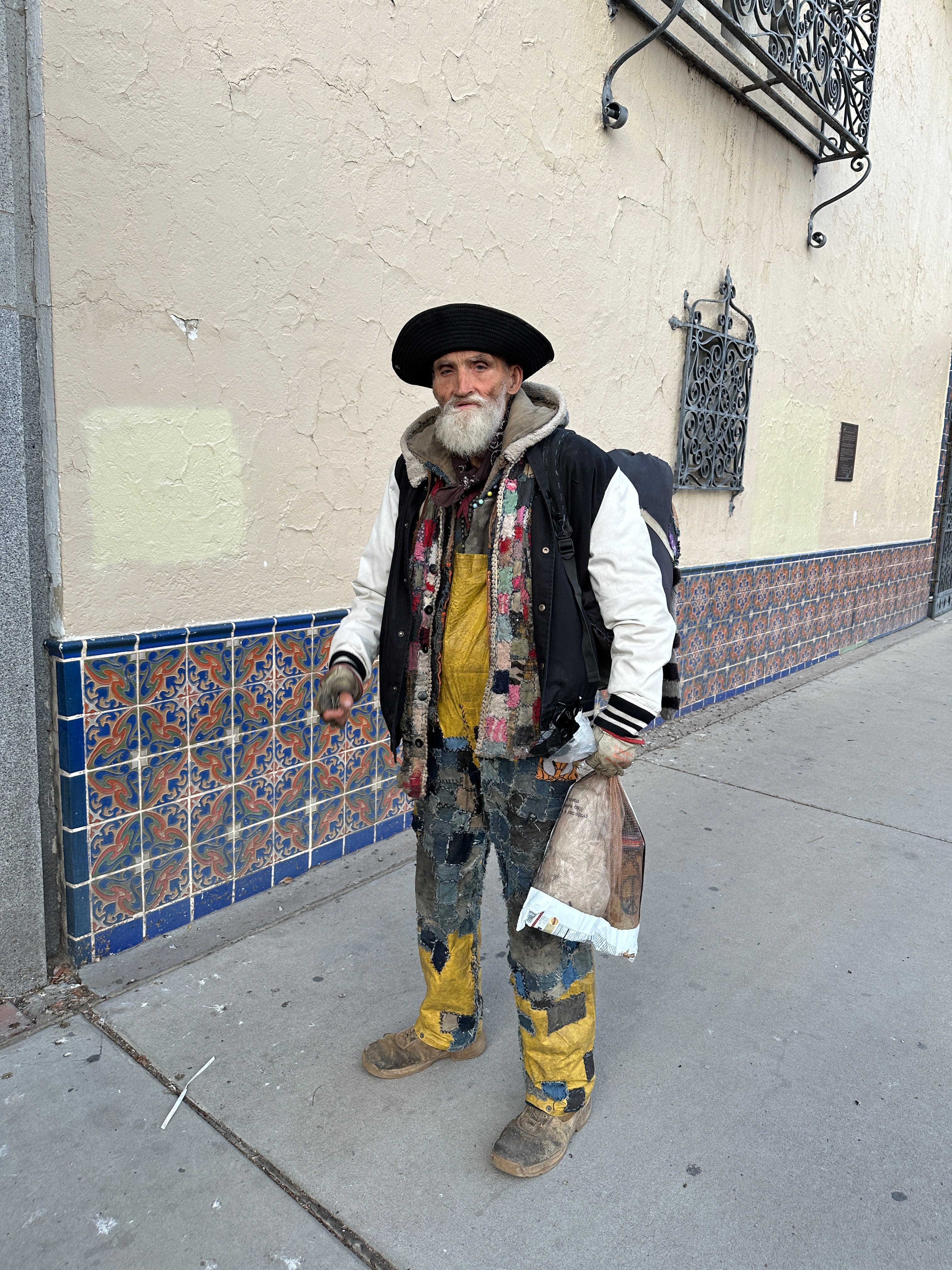
I found it to be an understated wonderland. The landscape might feel bleak mid-afternoon but wait until sunset (or sunrise) when the mountains and sky come alive and it will win you over. Entering the city, it feels like a strip mall sprawl wasteland, but once you’re in the city it’s an amalgamation of brightly colored stucco homes and a patchwork of murals that make every corner pop with contrast. The streets are quiet but if you step into the right locale, and there are many, it’s likely to be a buzzing spot that nurtures a variety of social scenes. The food is often simple, always delicious, and easy on the wallet. And the people are genuine, friendly, and warm.
Couple all the subtlety with the fact that it’s the most bilingual US city and it forms a wholly unique allure. It hit me in a way that completely put me at ease. It’s the kind of vibe that gets you out of your own head, like any good vacation destination. Hell, at the Dome Bar, the aura had me in a rare flow flirtin’ with our bartender like I was living out the Marty Robbins song, “El Paso.” That’s the power of this place.
You won’t find El Pasoans convincing you it’s great, but it is, they’re just too modest to say so. Nor will you find the destination guides and influencers pushing it on you like the next great island gem. But here’s the thing, it is an island, just a landlocked one. You only need to reimagine what that looks like. For the unpretentious traveler, looking to explore a different culture at an easy pace, El Paso will make you feel alive and content.
Other Hits - These did not make it into the story but are worth a mention and visit.
King’s X + Lucy’s - A great dive bar attached to a hole-in-the-wall restaurant - get the Machaca. They’ll bring the food to you at the bar.
Franklin Mountain Trails + Scenic Drive + Rim Road - An underrated running city with plenty of hills, flats, trails, and roads. Scenic Drive is worth it, but it runs out of sidewalk and gets a bit sketchy on the tight, blind corners. Use caution.
L&J Cafe - Worth the hype - a perfect taste of El Paso Mexican food.
Coffee Party - An awesome coffee shop with an exceptional little courtyard for hanging out.
Some Misses - A few spots I’ve only heard good things about but failed to get to.
Rocketbuster - I’ve heard nothing but good things about this famous custom boot maker, and I think they give tours, I’m still not sure how I missed fitting it in.
Taqueri Elemi - These tacos look insane, why didn’t I go?
Aurellia’s Brewhouse - It’s right next to Elemi and seemed to be the premier brewery in El Paso.
I’ve been looking forward to this one. It did not disappoint!
I've only ever been there once, for one day, and had very much the same impression. Really want to go back and spend more time there. And great travel writing, as always!